MLB Parlay Betting: Multi-Game Accumulators for UK Punters
 Available in US
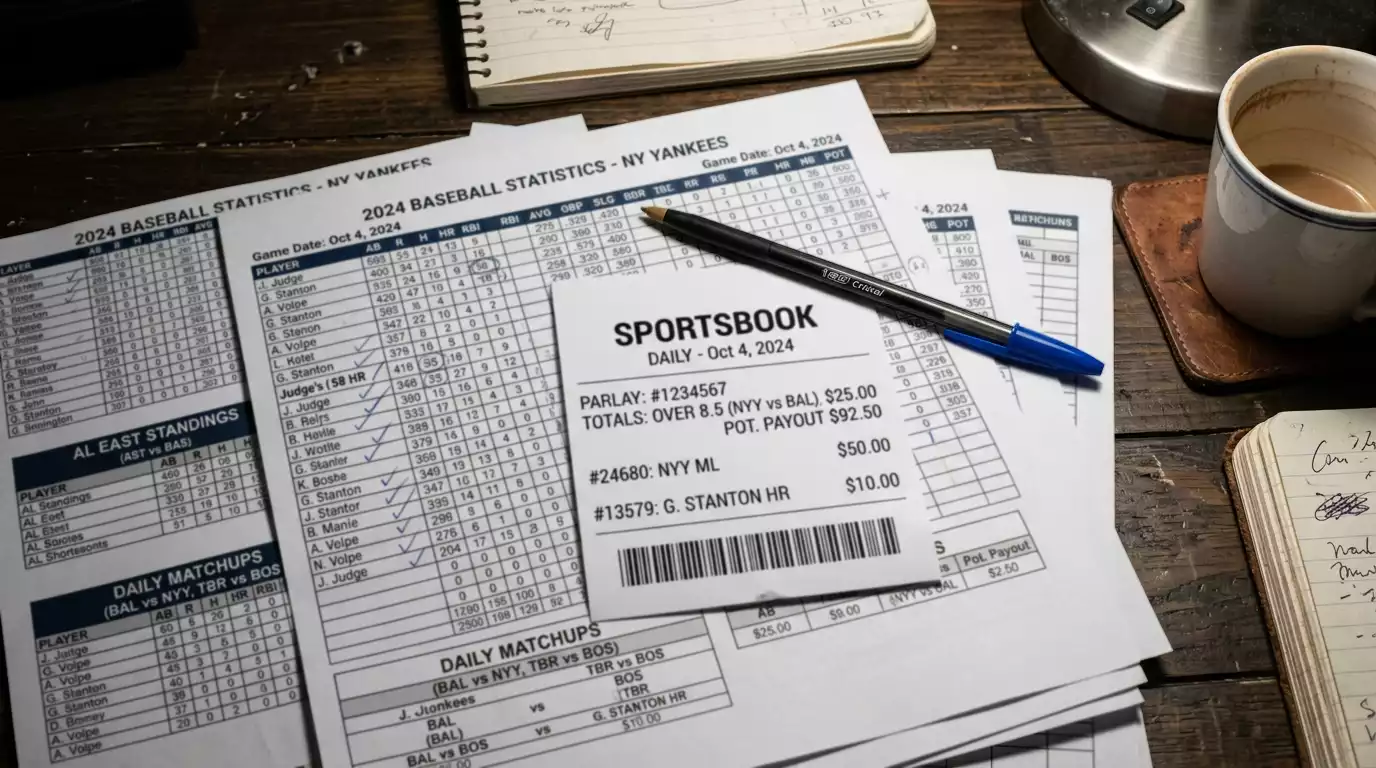
The first parlay I ever placed on baseball was a four-leg accumulator on a random Tuesday night in June. I picked four heavy favourites, each priced around 1.50 in decimal odds, and felt clever about it — the combined payout was roughly 5.06 for what I considered four near-certainties. Two legs won. The other two lost by a single run each. That was my introduction to the fundamental tension of parlay betting: the maths that makes the payouts attractive is the same maths that makes winning consistently so difficult.
Multi-game MLB parlays — called accumulators or accas in the UK — combine separate game outcomes into a single wager. Every leg must win for the bet to pay out. The appeal is obvious: modest stakes can produce substantial returns. The risk is equally obvious: one wrong result wipes out the entire ticket. What most punters never stop to calculate is exactly how much extra margin they are paying for the privilege of those combined odds.
How Multi-Game MLB Parlays Work
Have you ever wondered why sportsbooks promote parlays so aggressively? The answer sits in the hold rate — the percentage of total handle that operators retain as gross revenue. The US industry average was 10.15% in 2025, but on parlays, that effective hold climbs significantly higher. Each leg you add multiplies the individual margins together, creating a compounding cost that grows with every selection.
The mechanics are simple. You select two or more outcomes from different MLB games, and the sportsbook multiplies the decimal odds together to produce a combined price. A two-leg parlay at 1.90 and 2.10 pays 3.99. A three-leg parlay at 1.90, 2.10, and 1.80 pays 7.18. The numbers look generous because they reflect probability correctly — winning all three outcomes simultaneously is genuinely unlikely. What they conceal is the margin built into each individual leg.
If the true probability of each outcome were reflected in the odds, the fair combined price on that three-leg parlay would be higher than 7.18. The gap between the fair price and the posted price is the operator’s edge, and it grows with every leg you add. This is not a reason to avoid parlays entirely, but it is a reason to approach them with a clear understanding of what you are paying.
Optimal Leg Counts and Correlation Traps
I learned the hard way that not all parlay constructions are equal. During my first full MLB season, I was building five- and six-leg accumulators almost daily. The hit rate was abysmal — somewhere around 4% — and my return on investment was deeply negative. When I stripped the data back, the problem was obvious: I was paying a cumulative margin of roughly 30-40% on every ticket, which meant I needed to be spectacularly right just to break even.
Two- and three-leg parlays are the sweet spot for anyone who insists on multi-game betting. The margin penalty is manageable, the hit rate remains realistic, and the payouts still offer meaningful uplift over flat betting. Beyond three legs, the mathematical headwinds become severe. Every additional selection roughly doubles the likelihood of at least one loss occurring — and in a sport where 2,430 regular-season games produce an enormous amount of variance, even strong favourites lose more often than casual bettors expect.
The correlation trap is subtler but equally important. Two games on the same day are statistically independent events, the outcome of Yankees versus Red Sox has no bearing on Dodgers versus Padres. But some bettors mistakenly assume that selecting favourites across a full slate creates a “safe” parlay, as though one team winning makes another more likely to win. It does not. Each leg carries its own independent risk, and same-game parlays that combine correlated legs within a single match operate under entirely different rules.
Daily Schedule Advantage: Building Parlays From a Full Slate
One thing MLB offers that no other major sport can match is sheer volume. With 2,430 games across the regular season, there are nights when twelve or fifteen games run simultaneously. That density creates a unique environment for parlay construction. You have enough options to be genuinely selective rather than forcing legs into a ticket because the day’s card is thin.
I use the daily schedule as a filter, not a shopping list. On a typical weeknight during the MLB season, I might identify two or three games where I have a strong view, a pitching mismatch, a bullpen advantage, a weather-driven total, and only combine them if the individual prices justify it. If one of those games does not offer sufficient value as a standalone bet, it does not belong in a parlay either. The mistake most bettors make is reversing this logic: starting with the desire to build a parlay and then searching for legs to fill it.
Time zones work in your favour if you are based in the UK. Most MLB games start between 11 pm and 2 am BST, which means you can spend the evening evaluating the full slate, checking lineup confirmations, and monitoring late line movements before committing. That window of preparation is a practical advantage over bettors who place their parlays in the morning and hope for the best.
When Parlays Make Strategic Sense
After everything I have said about the mathematical disadvantages of parlays, you might assume I never touch them. That is not the case. I use multi-game parlays in specific, limited situations where the structure of the bet itself provides a strategic benefit that flat betting cannot replicate.
The first scenario is correlated weather plays. When multiple outdoor stadiums face similar wind conditions on the same evening, particularly wind blowing out at Wrigley Field, Coors Field, and another hitter-friendly park, combining over totals in a small parlay can make sense because you have a shared environmental thesis driving each selection. The outcomes are still statistically independent, but the underlying edge you are exploiting is consistent across games.
The second is bankroll-constrained entertainment betting. If you have set aside a small portion of your monthly bankroll specifically for higher-risk, higher-reward wagers, a disciplined two-leg parlay on strong views is a reasonable way to use that allocation. The key word is disciplined, this means pre-setting the amount, treating it as a known cost, and not chasing losses when the parlay does not land.
The third scenario is hedging. Parlays can serve as a cheap hedge against futures positions. If you hold an outright bet on a team to win the World Series, a small parlay backing their opponents during a specific regular-season series can offset some of your exposure. This is niche, but it illustrates the point: parlays have uses beyond recreational gambling, provided you understand the cost structure well enough to deploy them intentionally.
How many legs should an MLB parlay include?
Two or three legs represent the practical sweet spot. Beyond three selections, the cumulative margin penalty and the compounding probability of a single loss make consistent profitability extremely difficult. Most profitable parlay bettors keep their ticket sizes small and their selection criteria strict.
Are correlated parlays treated differently by UK bookmakers?
Multi-game parlays across separate MLB contests are not correlated, each game is an independent event. Same-game parlays, which combine legs from a single match, are treated differently because the outcomes within one game can influence each other. UK bookmakers adjust odds accordingly for same-game constructions.
Created by the ”Online Betting mlb” editorial team.